What it takes to deliver a net zero system: AEC Energy 2050 report
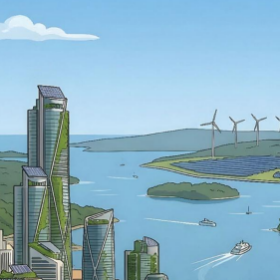
The Australian Energy Council has released its Energy 2050 report addressing what policy makers and industry might do to deliver a net zero system, while balancing affordability, reliability and sustainability.
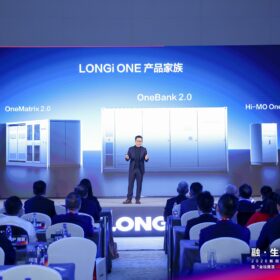
Global LONGi service centre network to support new one-stop-shop strategy
LONGi has launched LONGi ONE, an integrated solar-plus-storage product strategy for grid-scale, and commercial and industrial projects, which will be supported by a growing network of 30 new service centres opening in key locations globally by 2028.

Victorian regional council adopts renewable energy guidelines
A local Victorian council has pre-empted future large-scale renewable energy project proposals by developing a comprehensive clean energy guideline, based on community consultation.
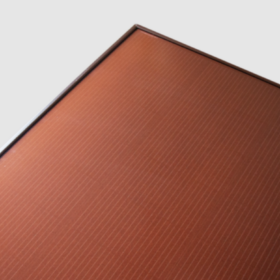
Solar Fabrik launches 400 W red-brown module for heritage roofs
Solar Fabrik has introduced a 400 W red-brown glass-glass PV module designed to meet strict aesthetic requirements for historic and protected buildings, offering a 20.02% efficiency and compatibility with traditional tiled rooftops.
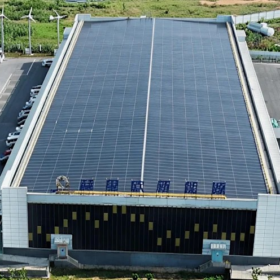
ClearVue secures global certification for metal-backed solar panels
Building-integrated PV technology company ClearVue Technologies is a step closer to commercial deployment of its metal-backed solar panels after securing global IEC certification for the integrated rooftop system.
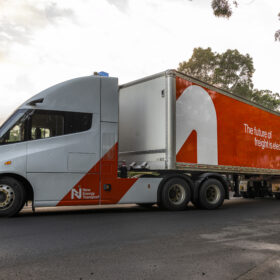
Trucking company says fully electric delivery ushers in new era for road freight
Trucking company New Energy Transport says electric road freight is possible now and already commercially viable in Australia after completing what it is calling the country’s first fully electric ‘end-to-end’ heavy road freight delivery.
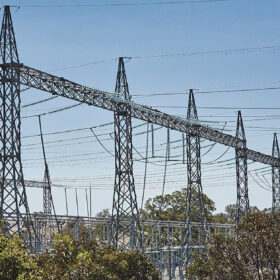
ElectraNet unveils transmission plans to support demand growth
A multibillion-dollar pipeline of electricity transmission upgrades is being proposed by South Australia’s network operator ElectraNet as it seeks to keep pace with “unprecedented” levels of connection demand.
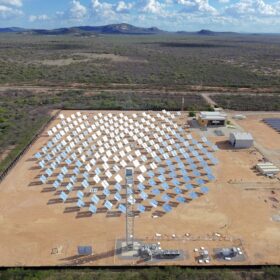
RayGen rolls out 1 MW concentrated solar power plant in Brazil
Australian solar and thermal energy storage company RayGen says it has achieved a major international milestone with the commissioning of a 1 MW concentrated solar plant in Brazil.
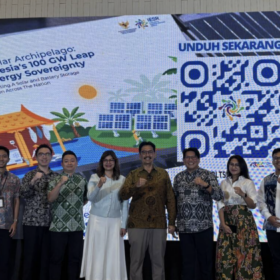
Indonesia’s path to 100 GW of solar
A study from the Institute for Essential Services Reform and Indonesia’s Coordinating Ministry for Economic Affairs explores how Indonesia can turn its target of deploying 100 GW of solar from mandate to mobilisation.
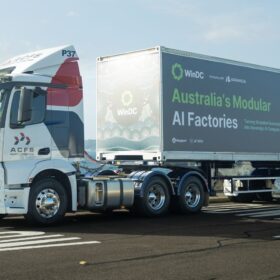
Portable data centres to address rising levels of curtailment
Sydney-headquartered start-up WinDC has partnered with United States-based Armada in a move designed to address rising levels of utility-scale solar and wind curtailment in Australia and also satisfy ballooning demand for energy-intensive data centre infrastructure.